

Why Some Swiss Brands Barely Need To Reinvent Themselves
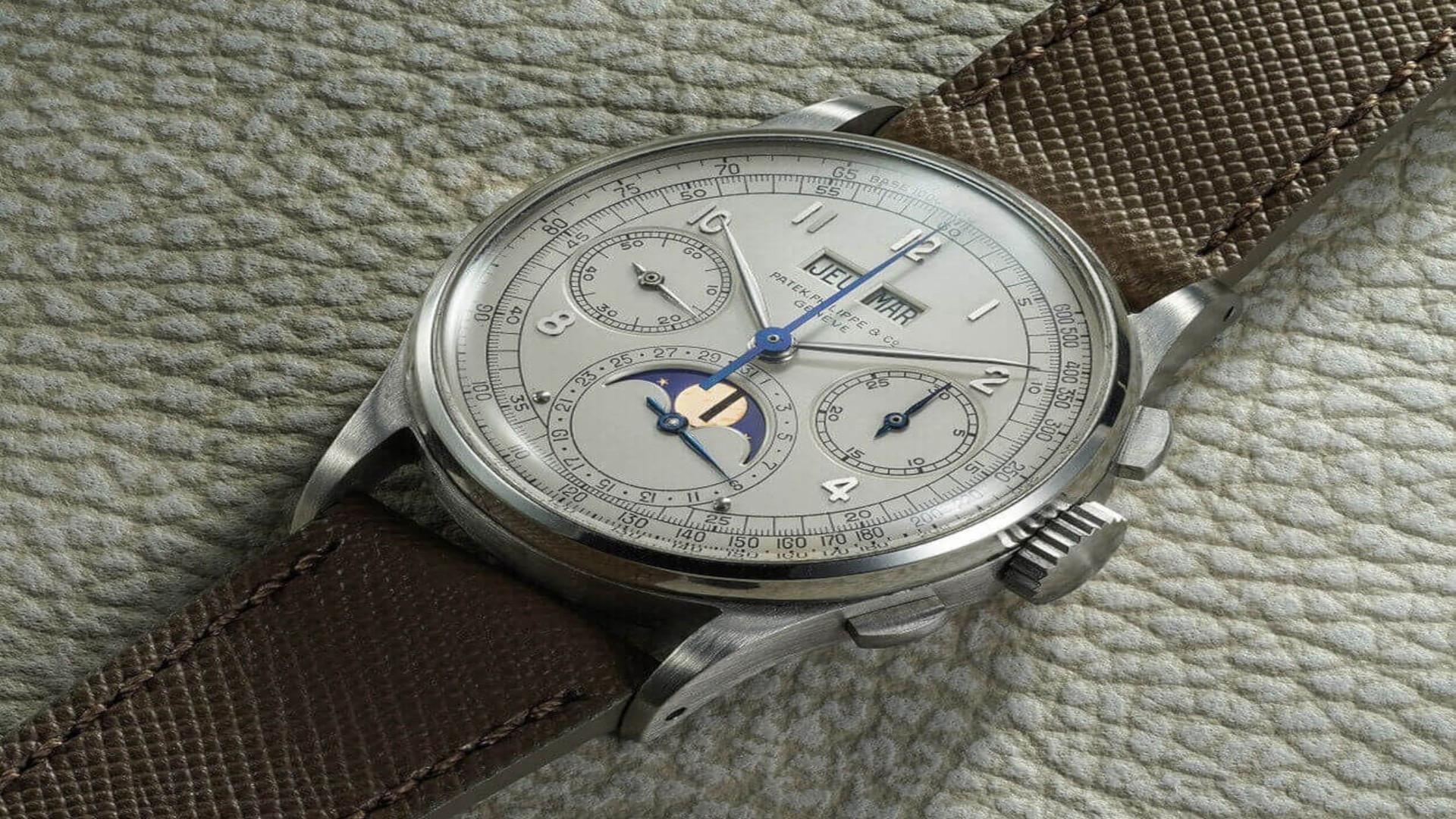
Swiss chocolatier Lindt & Sprüngli still sells familiarity. Geneva watchmaker Patek Philippe still builds scarcity, craftsmanship and family control into the product. Victorinox remains anchored in the Swiss Army Knife, USM in a modular furniture system developed in the 1960s, and LAUFEN in ceramic bathroom design. Bally, the Swiss luxury footwear and leather-goods house, shows the more difficult side of the same story: deep heritage helps only when customers can still understand what the brand stands for now.
The strongest of these companies have not stayed relevant by constantly changing what they are known for. They have protected one clear product idea or capability and modernised the parts around it, whether through distribution, design, technology, new categories or a broader cultural setting. That approach gives them continuity without making them static.
Lindt keeps the product familiar and changes what sits around it
Swiss chocolatier Lindt & Sprüngli has spent more than a century building its business around premium chocolate, gifting and a handful of products that customers recognise immediately. Lindor, the gold bunny and the company’s red-and-gold visual language still do much of the brand work, even as Lindt expands into new markets and launches products around changing tastes.
The business remains large and commercially resilient. Lindt & Sprüngli reported CHF 5.92 billion in sales in 2025, with organic growth of 12.4% and EBIT of CHF 971 million. Price increases of 19% helped offset historically high cocoa costs, while volume and mix fell by 6.6%, showing that even a strong legacy brand cannot fully escape consumer resistance when prices rise sharply.
The more interesting part of Lindt’s strategy is how little it needs to disturb the core brand when it wants to participate in a trend. Its rollout of Dubai Style chocolate gave the company access to a highly current flavour and gifting trend without requiring a separate identity or a new positioning. The product still sat inside a brand system customers already understood.
For marketers, the lesson is straightforward: newness does not always have to come from a new brand idea. A strong existing identity can often carry new formats and products more efficiently than a complete repositioning.
Victorinox stretches one clear idea across several categories
Victorinox built its name on knives, most famously the Swiss Army Knife, before extending the same reputation for utility and precision into kitchen tools, watches and travel gear. The company began as Karl Elsener’s cutlery workshop in Ibach in 1884 and still uses the knife as the clearest symbol of what the brand stands for. Today, Victorinox sells products in more than 120 countries and employs more than 2,200 people worldwide, including around 1,200 in Switzerland. The company says it has added more than 600 jobs over the past decade, while ownership remains with the founding family. The category expansion works because each new product can borrow from the same promise. A suitcase and a pocket knife have very different uses, but both can credibly sit under a brand associated with durability, practicality and Swiss engineering. That is a useful discipline for any established company considering expansion. A strong name can open a door, but the new product still needs a clear reason to belong there. Victorinox has generally stayed close to categories where its existing reputation can travel with it.
USM proves that a product can age without becoming dated
Swiss furniture maker USM has built much of its international reputation around one product system: USM Haller, the modular steel furniture developed by Paul Schärer Jr. and architect Fritz Haller in the early 1960s. The company filed the patent for its ball-joint system in 1965, and series production followed in 1969. More than sixty years later, the basic idea remains intact. USM furniture can be taken apart, extended, reconfigured and repaired rather than replaced. The company did not design the system around today’s language of circularity or sustainability, but the original engineering now fits those priorities almost perfectly. Old and new components remain compatible, and the product supports a substantial second-hand market because a cabinet bought decades ago can still be adapted rather than discarded. More than 92% of USM’s revenue comes from product lines carrying Cradle to Cradle certification, while the company has committed to cutting Scope 1 and 2 emissions by 42% by 2030 compared with 2021 and Scope 3 emissions by 25%. USM also reports an average employee tenure of 11.5 years internationally and 15.5 years at its Swiss headquarters. In a company built around manufacturing knowledge and a highly consistent product system, that continuity supports the brand in a very practical way. USM offers one of the clearest lessons in the group: if a product still solves the original problem well, changing it simply to make it look newer can destroy part of its value.
LAUFEN keeps ceramics at the centre while widening the category
LAUFEN is a Swiss bathroom and ceramics specialist whose core expertise still lies in sanitary ceramics, even as the company has expanded into furniture, faucets, mirrors, installation systems and digital bathroom products. The company dates to 1892, and its long manufacturing history still shapes how it presents itself. Rather than moving away from ceramics, LAUFEN has invested in new production methods and used design collaborations to push the category further. One of its most significant recent manufacturing changes came through the electric tunnel kiln at its Gmunden plant in Austria, which allows sanitary ceramics to be fired without direct CO2 emissions from the kiln. The company has also worked with architects and designers to make the bathroom feel less like a purely functional category and more like a part of the wider interior-design market. Its Colour Archaeology project took another route, developing a ceramic colour palette after research into more than 10,000 historical objects held in museum collections. That kind of work makes sense for a company with technical expertise in ceramics because the design story still begins with the material itself. LAUFEN has also strengthened its position in premium interiors through the integration of Italian bathroom company antoniolupi, which generated more than €42 million in turnover in 2024 and employed around 100 people. Roca Group CEO Albert Magrans said the combination strengthened the group’s position in the high-end segment. The company has widened the experience around the product without losing sight of the capability that made it credible in the first place.
Bally shows where heritage stops doing the work
Bally is a Swiss luxury footwear and leather-goods house with roots in shoemaking and a history dating to 1851. It has the kind of heritage many fashion brands would like to inherit: Swiss origins, long-standing manufacturing knowledge, extensive archives and a clear connection to leather craftsmanship. Its problem has been less about history than about translating that history into a consistent contemporary position. The company has recently returned to its archive more deliberately. Its Spring/Summer 2026 tennis collection revisited styles linked to the Swiss team that won the 1992 French Open, including a reissue of the Competition sneaker. Bally presented the collection as a way to connect its sports history with the brand’s current visual direction. That is a stronger use of heritage than simply repeating a founding date or talking broadly about craftsmanship. A specific product, sporting reference or design detail gives customers something they can actually see and remember. Bally also shows why legacy alone cannot carry a fashion brand. Consumers may know that the company is old, Swiss and well made, but they still need a clear reason to want the product now. Fashion demands a stronger point of view than categories where technical continuity can do more of the work. For Bally, the archive becomes useful when it leads to a recognisable product or idea rather than functioning as decoration around the brand.
What other companies can learn from them
These brands do not offer a single Swiss formula, but their histories point to a few practical rules that established companies can use.
The first is to know which part of the business customers would genuinely miss. Patek Philippe has independence and watchmaking standards. Victorinox has the logic of the Swiss Army Knife. USM has its modular system. Lindt has premium chocolate and highly familiar gifting products. LAUFEN has ceramic expertise. When that core is clear, companies can change many other things without losing recognition.
The second is to separate genuine innovation from cosmetic activity. USM can improve manufacturing and sustainability without redesigning Haller every few years. Patek can develop new movements without abandoning its watchmaking standards. LAUFEN can add digital products and lower-carbon production while keeping ceramics visible at the centre of the brand.
The third is to use history as evidence. A founding date alone does very little. Patek’s family ownership still affects how the company operates. Victorinox still manufactures in Ibach and remains family-controlled. USM still makes a system based on a design more than sixty years old. Those facts make the history credible because customers can still see it in the business today.
The final lesson is that companies should know when not to change. Marketing teams often feel pressure to react to every visual trend, new platform or shift in consumer behaviour, but continuity can be more valuable when the product and reputation remain strong.
Lindt, Patek Philippe, Victorinox, USM and LAUFEN have all changed substantially over time, yet customers can still see a direct line between what the companies sell today and what made them distinctive in the first place. Bally is working to make that line clearer again by using more specific parts of its archive and product history. For established brands, modernisation does not have to mean looking new. It can mean keeping the part customers already trust and improving everything around it.